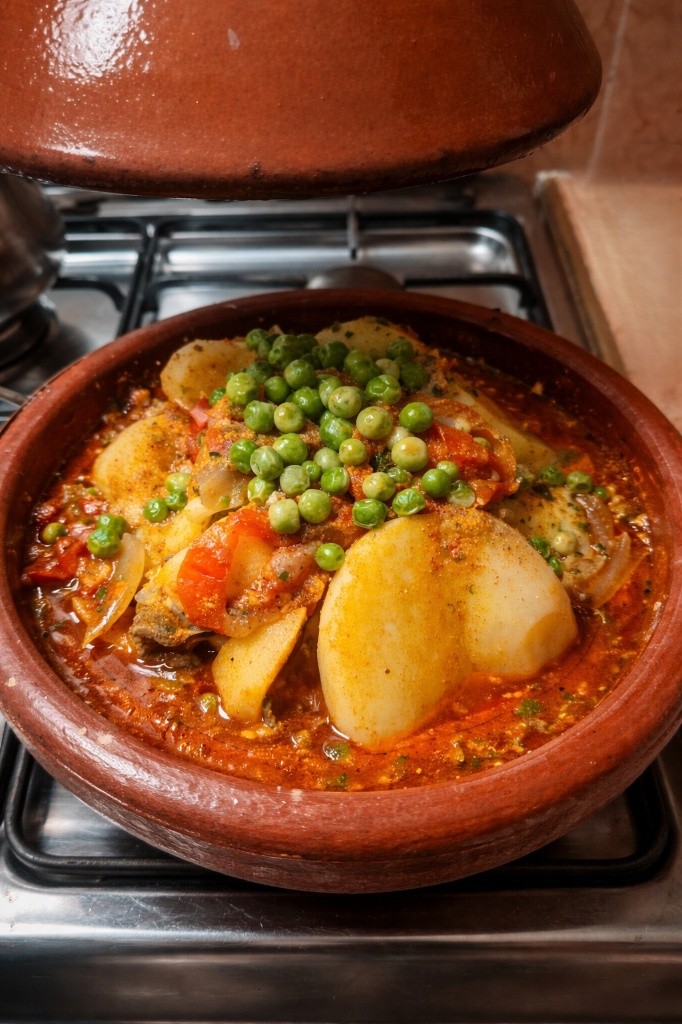
The Magic of the Moroccan Tagine: My Favorite One-Pot Comfort Food
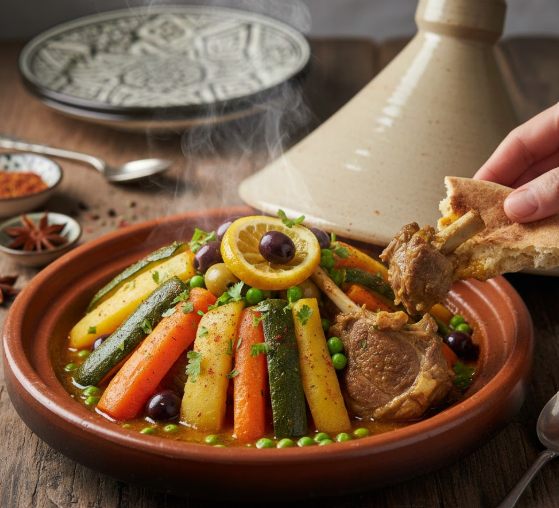
If you’ve ever walked through the streets of a Moroccan medina, you’ve smelled it—that warm, sweet, and earthy aroma drifting from clay pots tucked over small charcoal fires. That is the Moroccan Tagine.
For us in Morocco, a Tagine isn’t just a meal; it’s a way of life. It’s what we eat when the family gathers on a Friday, or when we want something healthy, slow-cooked, and comforting. The best part? You don’t need to be a professional chef to make a great one. You just need a little patience.
What actually is a Tagine?
A lot of people get confused, so let’s clear that up first. The word “Tagine” refers to two things: the conical clay pot itself and the slow-cooked stew inside.
The shape of the pot is actually quite genius. As the food cooks, the steam rises into the cone, condenses, and falls back down onto the meat and veggies. This keeps everything incredibly tender without needing a ton of oil or water. It’s basically the world’s oldest slow cooker!
Why this is the ultimate “Healthy” dish
Unlike a lot of restaurant food that is loaded with butter or heavy sauces, a traditional Moroccan Tagine relies on fresh vegetables and olive oil. It is a balanced mix of protein (like lamb, chicken, or beef) and whatever vegetables are in season. It’s naturally gluten-free and packed with nutrients.
If you enjoy comforting, flavor-packed dinners, you might also love this Creamy Garlic Shrimp Pasta for a quicker weeknight option.
The Ingredients You’ll Need
You can vary the vegetables, but here is my go-to “Daily Tagine” setup:
- The Protein: 500g of Chicken or Lamb (bone-in gives the best flavor).
- The Veggie Base: 2 Onions (sliced thin) and 3 cloves of Garlic.
- The “Mountain”: 2 Carrots, 2 Potatoes, and maybe some zucchini or green beans.
- The Moroccan Spice Blend: This is the secret. You’ll need 1 tsp Ginger, 1 tsp Turmeric, a pinch of Saffron (if you have it), salt, pepper, and a bit of Cinnamon.
- The Finish: A handful of olives and some preserved lemon.
Preserved lemons are a staple in Moroccan cooking and add a unique tangy depth to the dish. If you’re curious about how they’re traditionally prepared, you can learn more from trusted culinary sources like Serious Eats.
Step-by-Step: How to Layer it Like a Pro
1. Sauté the Base Put your Tagine (or a heavy pot) on low heat. Add a generous splash of olive oil. Sauté the onions and the meat with your spices. You want the meat to get coated in that golden color.
2. Build the Mountain This is my favorite part. We don’t just “toss” veggies in. We build them in a cone shape. Put the carrots in first (they take longest to cook), then the potatoes, then the lighter veggies. It should look like a little vegetable volcano.
3. The Slow Simmer Add a tiny bit of water (maybe half a cup). Close the lid. Now, walk away. Keep the heat very low. A chicken tagine takes about an hour, while lamb might take two.
4. The Final Touch Ten minutes before serving, add your olives and a slice of preserved lemon. This adds that “zing” that makes Moroccan food famous.
My Top Tips for Beginners
- Low and Slow: If you see the sauce drying out too fast, your heat is too high.
- Don’t Stir! This isn’t a soup. Once you layer your veggies, leave them alone. The steam does the work.
- The Bread is the Spoon: In Morocco, we don’t usually use forks. Use a piece of crusty bread to scoop up the sauce and the veggies. Trust me, it tastes better that way.
Final Thoughts
The Moroccan Tagine is proof that you don’t need fancy equipment to make world-class food. It’s affordable, it’s healthy, and it makes your whole house smell amazing. Once you try it, you’ll see why it’s the heart of every Moroccan home.