Cooking is fun, but the mess it creates can be overwhelming. Many people end up spending more time scrubbing pans and wiping counters after dinner than actually enjoying their meal. One simple thing that helps is learning to clean as you cook, which keeps your kitchen organised, prevents clutter, and makes post-meal cleanup faster. This article will teach practical strategies to stay on top of messes while preparing meals, so cleaning doesn’t slow you down or ruin the joy of cooking.
Why Kitchens Get Messy During Cooking
Mess happens because cooking involves multiple steps at once: chopping, stirring, measuring, and sautéing. Each step can generate spills, scraps, and dirty utensils. In many cases, people focus solely on the recipe, leaving cleaning for the end. This leads to stacked dirty dishes, sticky counters, and food waste. Another reason is lack of organisation—ingredients scattered on the counter, open packaging, or unwashed prep tools make it easy to lose track of cleanliness. Understanding why kitchens get messy is the first step to preventing it.
Practical Solutions to Clean While You Cook
1. Start with a Clean Workspace
Before you even turn on the stove, clear and sanitise your counters, wash used utensils, and set up a trash or compost station nearby. One simple thing that helps is keeping a small bowl for scraps, which prevents frequent trips to the trash. A clean workspace minimises distractions and allows you to clean as you go without slowing down. For example, while onions are sautéing, you can rinse the cutting board and knife immediately after chopping.
2. Wash Utensils and Tools Between Tasks
Instead of letting a pile of dirty knives, spoons, and bowls accumulate, wash or rinse them between steps. A common mistake people make is saving all washing for the end, which makes cleanup intimidating and time-consuming. In many cases, a quick rinse or soapy wash during a natural pause—like while water boils—keeps things manageable. For instance, after whisking eggs, quickly rinse the whisk before moving on to mixing dough.
3. Use Prep Bowls and Containers
Use separate bowls for chopped ingredients, waste, and mixed items. One practical tip is to dedicate one bowl for scraps and peelings. This reduces countertop clutter and makes it easier to discard waste in one go. Similarly, placing prepped ingredients in small containers keeps them organised and prevents spills. In many cases, having a few prep bowls ready before cooking creates a natural rhythm for cleaning along the way.
4. Clean Surfaces Immediately After Use
Wipe counters, cutting boards, and stovetops as you cook rather than waiting until the end. One simple thing that helps is keeping a damp cloth or sponge nearby. For example, when you spill flour while measuring, wiping it up immediately prevents it from spreading or hardening. In many cases, small, frequent cleanups are faster and more effective than one big effort at the end.
5. Stack and Organize Dishes Strategically
When washing dishes during cooking isn’t practical, organise dirty items to avoid mess. Stack bowls, pans, and utensils in a single area instead of spreading them across the counter. One practical tip is to soak pots or heavily soiled items with hot water while continuing to cook. This makes scrubbing easier later and keeps your workspace tidy. In many cases, organised stacking prevents dishes from toppling or getting in your way.
6. Multitask Efficiently
Cooking naturally involves waiting periods—boiling, baking, or simmering. One simple thing that helps is using these moments for cleaning. Wash cutting boards, rinse bowls, or wipe surfaces while the oven preheats or the pasta cooks. In many cases, breaking cleaning into small chunks keeps it from feeling like an overwhelming task and ensures your kitchen stays manageable throughout the process.
7. Keep Cleaning Supplies Handy
Store sponges, scrubbers, and a small bottle of dish soap near your prep area. A common mistake people make is having to leave the kitchen mid-recipe to find supplies, which disrupts flow and discourages cleaning as they cook. In many cases, having tools within reach encourages quick, consistent cleanup and prevents spills from turning into stains.
Common Mistakes to Avoid
- Waiting Until the End to Clean – Letting dishes and spills accumulate makes post-cooking cleanup overwhelming.
- Ignoring Counter Organisation – Ingredients left scattered lead to unnecessary messes and wasted time.
- Skipping Rinsing Between Tasks – Dirty utensils or bowls can contaminate fresh ingredients or sticky sauces.
- Not Using Prep Bowls – Tossing scraps on the counter or mixing everything in one bowl increases mess and makes cleaning harder.
Real-Life Scenarios
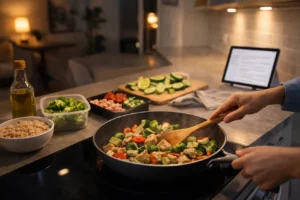
Imagine making a stir-fry with multiple vegetables, rice, and sauce. You chop peppers, onions, and carrots, leaving scraps on the counter. While the sauce simmers, you wash the cutting board and knife and put the scraps in the compost bowl. By the time the stir-fry is done, your counters are mostly clean, and post-meal cleanup takes just a few minutes.
Another example is baking cookies. Instead of waiting until the tray is empty, you rinse the measuring cups and mixing bowls between batches. Flour spills are wiped up immediately, preventing sticky layers on your counter. These small habits save time, reduce stress, and keep your kitchen functional.
Conclusion
Cleaning doesn’t have to slow you down. By preparing your workspace, washing utensils between steps, using prep bowls, wiping surfaces immediately, and multitasking during waiting periods, you can maintain a clean kitchen effortlessly. One simple thing that helps is treating cleanup as part of the cooking process rather than a separate chore. In many cases, these small habits reduce stress, save time, and make cooking more enjoyable from start to finish.
FAQs
1. How can I clean as I cook without slowing down?
Use natural pauses like boiling, baking, or simmering to wash utensils, wipe surfaces, or organise ingredients. Prep bowls and scrap containers also help manage mess
2. Should I wash all dishes while cooking?
Not necessarily. Focus on frequently used items and heavily soiled utensils. Soak pots or pans with tough residue for later cleaning.
3. How do prep bowls help with cleaning?
Prep bowls keep ingredients organised, reduce counter clutter, and provide a dedicated space for waste, making cleanup faster and easier.
4. Is it necessary to wipe spills immediately?
Yes. Small, frequent cleaning prevents sticky or hardened messes and reduces the effort needed for post-cooking cleanup.
5. How can I encourage myself to clean while cooking?
Keep cleaning supplies within reach, use natural waiting periods for cleaning, and treat cleanup as part of cooking. Small, consistent steps make it habitual and stress-free.