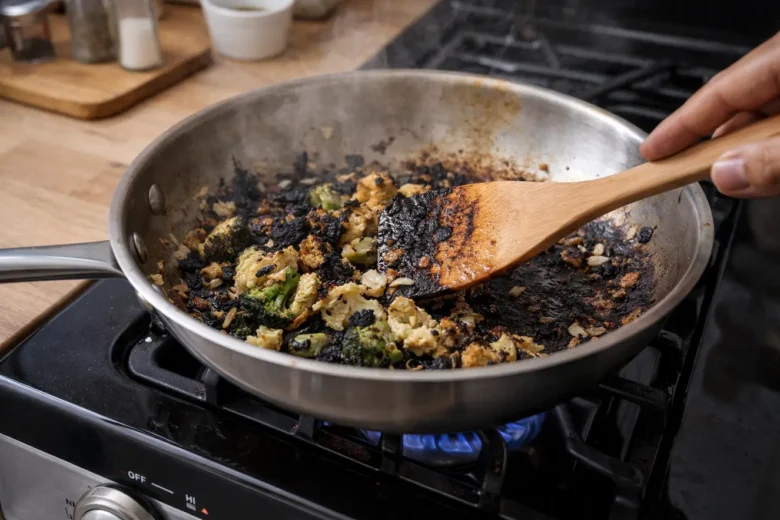
The truth is, food burning on low heat is more common than people think, and it’s usually caused by small mistakes that are easy to overlook. Low heat doesn’t always mean safe heat, and understanding why things burn—even when the flame is low—can completely change the way you cook.
In this guide, we’ll break down the real reasons behind this issue and walk through practical, easy-to-follow solutions. Whether you’re just starting out in the kitchen or already have some experience, these tips will help you cook more confidently without burning your food.
Understanding Why Food Burns Even on Low Heat
Uneven Heat Distribution
One of the most overlooked causes of burning is uneven heat. Even if your stove is set to low, the heat may not be spreading evenly across the pan. Some areas can still become hot spots, especially in cheaper or thin cookware.
When food sits on these hot spots for too long, it burns—even though the rest of the pan feels relatively cool. This is why you might see one side of your food overcooked while the other side is still underdone.
Thin or Low-Quality Cookware
Not all pans are created equal. Thin pans heat up quickly but also heat unevenly and lose control just as fast.
Low heat on a thin pan can still result in burning because the material doesn’t distribute the heat properly. Instead, it creates concentrated areas of high temperature that scorch food.
Residual Heat Build-Up
Another reason food burns at low temperatures is because of residual heat. Once a pan gets hot, it retains that heat—even after you lower the flame.
This means your “low heat” setting might still be cooking at a much higher temperature than you expect. If you don’t give the pan time to cool down, food continues cooking aggressively.
Lack of Proper Stirring or Movement
Food that stays in one place too long is more likely to burn. Even on low heat, constant contact with the same surface can lead to scorching.
This is especially common with sauces, rice, and eggs, which need occasional stirring or movement to cook evenly.
Not Enough Oil or Moisture
Dry cooking surfaces increase the chances of burning. Oil or moisture acts as a barrier between the food and the pan.
When there isn’t enough of it, food sticks and burns quickly—even at lower temperatures.
Overcrowding the Pan
Adding too much food at once can cause uneven cooking. While it might seem like overcrowding would reduce burning, it often does the opposite.
Some parts of the pan cool down while others stay hot, creating inconsistent cooking conditions that can lead to burning in certain spots.
Common Situations Where This Happens
Cooking Rice
Rice is one of the most common foods that burns on low heat. If the water evaporates too quickly or the heat isn’t evenly distributed, the bottom layer starts to scorch.
Frying Eggs
Eggs can burn quickly if the pan is too hot at the start or if there isn’t enough oil. Even on low heat, a hot pan can cause the edges to crisp too quickly.
Making Sauces
Sauces, especially those with sugar or dairy, are prone to burning. They require constant attention because they can stick to the bottom of the pan easily.
Reheating Food
Reheating leftovers on low heat can still lead to burning if the food isn’t stirred or if the pan is already hot.
Step-by-Step Solutions to Prevent Burning
1. Preheat Your Pan Correctly
Instead of starting on high heat and then lowering it, begin with medium or low heat from the start.
- Let the pan heat gradually
- Avoid sudden temperature changes
- Test with a small drop of water—it should gently sizzle, not instantly evaporate
This ensures better heat control throughout the cooking process.
2. Use the Right Cookware
Choose pans that distribute heat evenly.
- Thick-bottomed pans are more reliable
- Cast iron and stainless steel hold heat well
- Non-stick pans help prevent sticking and burning
Good cookware makes a noticeable difference, even on low heat.
3. Control Residual Heat
If your pan gets too hot:
- Remove it from the heat briefly
- Lower the flame and wait before continuing
- Avoid adding food immediately after reducing heat
This helps reset the cooking temperature.
4. Add Enough Oil or Liquid
Always ensure there’s enough oil, butter, or liquid in the pan.
- Coat the surface lightly but evenly
- For dry foods, consider adding a splash of water or broth
This creates a buffer and reduces direct burning.
5. Stir and Move Food Regularly
Don’t let food sit in one spot for too long.
- Stir sauces frequently
- Flip or move solid foods occasionally
- Use a spatula to prevent sticking
Movement helps distribute heat more evenly.
6. Avoid Overcrowding
Cook in smaller batches if needed.
- Give food enough space
- Allow heat to circulate properly
This prevents uneven cooking and burning.
7. Adjust Heat Gradually
Instead of making sudden changes:
- Increase or decrease heat slowly
- Monitor how food reacts
This keeps cooking more controlled and predictable.
Real Experience Section
In my experience, the biggest reason my food burned—even on low heat—was starting with a pan that was already too hot. I used to turn the heat high to “speed things up” and then lower it once I started cooking. However, by that time, the damage had already occurred.
What worked for me was changing my approach completely. I started heating the pan slowly and paying attention to how it felt before adding anything. That alone reduced burning significantly.
One mistake I made was assuming low heat meant I didn’t need to watch the food closely. I would briefly step away for a minute or two, only to return and find that something was either stuck or burnt. I’ve learned that even low heat requires attention, especially for certain dishes.
Another thing that helped was switching to a heavier pan. I didn’t realize how much my thin pan was contributing to the problem until I upgraded. The difference was immediate—food cooked more evenly, and burning became much less frequent.
Common Mistakes to Avoid
- Starting with a very hot pan and then lowering the heat
- Using thin or low-quality cookware
- Not adding enough oil or liquid
- Leaving food unattended, even on low heat
- Stirring too little or not at all
- Overcrowding the pan with too much food
- Ignoring hot spots in the pan
- Assuming low heat guarantees safe cooking
Pro Tips for Better Cooking Control
One helpful trick is to learn how your stove behaves. Not all stoves are the same—some run hotter even on low settings. Spend time experimenting so you understand its quirks.
Another tip is to use a heat diffuser. This is especially useful if your stove tends to create hot spots. It spreads heat more evenly and reduces the risk of burning.
You can also try lifting the pan slightly off the heat when things start to cook too quickly. This gives you instant control without turning off the stove completely.
If you’re cooking something delicate like sauces or eggs, consider using a double-boiler method. It provides gentle, indirect heat and minimizes burning.
Lastly, trust your senses. If you smell something starting to burn or hear excessive sizzling, don’t ignore it. Adjust immediately instead of waiting.
FAQs
Why does my food burn even when the flame is low?
This usually happens due to residual heat, uneven heat distribution, or a pan that’s already too hot before cooking begins.
Is low heat always safer for cooking?
Not necessarily. Low heat can still burn food if the pan retains too much heat or if the food isn’t monitored properly.
How do I know if my pan is too hot?
If oil starts smoking or food sizzles aggressively right away, the pan is likely too hot.
Can the type of stove affect burning?
Yes, gas and electric stoves behave differently. Some electric stoves retain heat longer, increasing the risk of burning even on low settings.
What’s the best way to fix burnt food while cooking?
Lower the heat immediately, add a bit of liquid if possible, and gently move the food to prevent further burning.
Conclusion
Burning food on low heat isn’t as strange as it seems—it’s usually the result of hidden factors like residual heat, uneven cookware, or simple cooking habits. Once you understand these causes, the solution becomes much easier.
By using better cookware, controlling heat more carefully, and paying attention to how your food cooks, you can avoid most burning issues. Small adjustments in your routine can lead to big improvements in your results.
Cooking is a skill that improves with awareness and practice. The more you understand your tools and ingredients, the more control you’ll have. Stick with these techniques, and you’ll find yourself cooking with more confidence—and far fewer burnt meals.