The goal isn’t just to cook chicken that tastes excellent—it’s to cook it safely so it’s fully done, juicy, and free from any health risks. Many people either overcook chicken out of fear or undercook it without realizing. Both can ruin your meal in different ways.
In this guide, I’ll walk you through how to cook chicken safely and properly at home using practical, real-life methods. Whether you’re cooking your first chicken dish or trying to improve your technique, this guide will help you get consistent, safe, and delicious results every time.
Why Proper Chicken Cooking Matters
Risk of Bacteria in Raw Chicken
Raw chicken can carry bacteria like Salmonella and Campylobacter. These aren’t visible, and you can’t detect them by smell or appearance. If chicken isn’t cooked properly, these bacteria can survive and cause foodborne illness.
That’s why simply “guessing” whether the chicken is done isn’t enough. Safe cooking requires proper temperature and handling from start to finish.
Cross-Contamination in the Kitchen
Another major issue is how easily raw chicken can contaminate other foods. Juices from raw chicken can spread bacteria to cutting boards, utensils, and even your hands.
If not handled carefully, such contamination can turn a safe meal into a risky one—even if the chicken itself is fully cooked.
Overcooking vs Undercooking
People often make one of two mistakes:
- Undercooking chicken is unsafe
- Overcooking chicken, which makes it dry and tough
Finding the balance is key. Proper technique ensures the chicken is fully cooked without losing its flavor and texture.
Understanding Chicken Cuts and Cooking Needs
Different Cuts Cook Differently
Not all chicken pieces cook the same way.
- Chicken breasts are lean and cook quickly
- Thighs and drumsticks have more fat and take longer
- A whole chicken requires even heat distribution
Understanding these factors helps you avoid uneven cooking, where some parts are overdone while others are undercooked.
Bone-In vs Boneless
Bone-in chicken takes longer to cook but often stays juicier. Boneless cuts cook faster but can dry out if you’re not careful.
Adjusting your cooking time and heat based on the type of cut makes a big difference in both safety and taste.
Step-by-Step Guide to Cooking Chicken Safely
1. Store Chicken Properly Before Cooking
- Keep raw chicken in the fridge at a cold temperature
- Store it in a sealed container to prevent leaks
- Use it within 1–2 days or freeze it
Proper storage reduces bacterial growth before you even start cooking.
2. Wash Your Hands and Surfaces
Before and after handling raw chicken:
- Wash your hands thoroughly with soap and water
- Clean cutting boards, knives, and countertops
This step is essential to prevent cross-contamination.
3. Avoid Washing Raw Chicken
It might feel natural to rinse chicken, but it’s not recommended. Washing can splash bacteria onto nearby surfaces, spreading contamination instead of removing it.
Cooking chicken properly will kill bacteria, so washing isn’t necessary.
4. Use Separate Utensils
- Use one cutting board for raw chicken
- Use another for vegetables or cooked food
This practice prevents bacteria from spreading between foods.
5. Cook at the Right Temperature
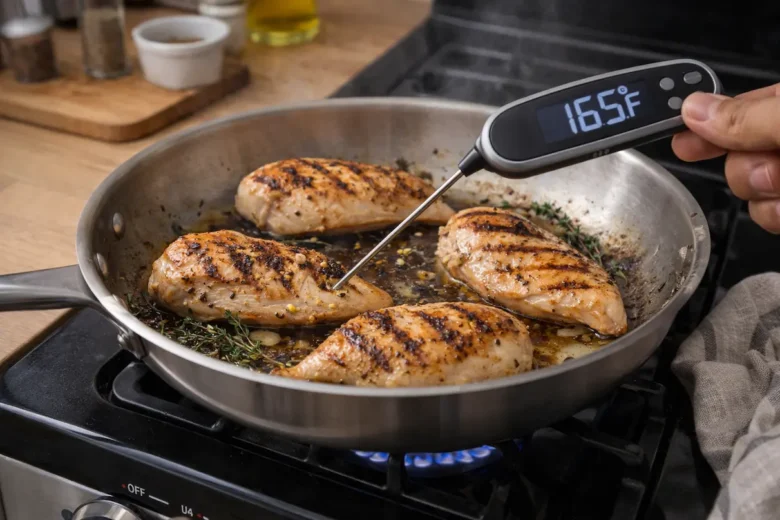
The safest way to know if the chicken is done is by checking its internal temperature.
- Chicken should reach 75°C (165°F) internally
- Use a food thermometer for accuracy
Insert the thermometer into the thickest part without touching the bone.
6. Cook Evenly
- Avoid cooking on very high heat only
- Use medium heat to cook through properly
- Flip or turn pieces to ensure even cooking
This technique prevents the outside from burning while the inside remains undercooked.
7. Let Chicken Rest After Cooking
Once cooked:
- Let the chicken rest for a few minutes
- This allows juices to settle and improves texture
It also ensures any remaining heat finishes the cooking process.
Cooking Methods and Safety Tips
Pan-Frying
Pan-frying is quick and convenient.
- Preheat the pan properly
- Use enough oil to prevent sticking
- Cook on medium heat and flip regularly
Check the internal temperature before serving.
Baking
Baking is one of the safest methods because it cooks evenly.
- Preheat the oven
- Use a baking dish or tray
- Cook until the internal temperature is reached
This method works well for both small and large portions.
Grilling
Grilling adds flavor but requires attention.
- Avoid direct high flames for too long
- Turn the chicken frequently
- Ensure the inside is fully cooked
Charred outside doesn’t always mean cooked inside, so check carefully.
Boiling or Poaching
This method is simple and safe.
- Cook chicken in simmering water
- Ensure it cooks through completely
It’s especially useful for shredding chicken for other dishes.
Real Experience Section
In my experience, the biggest improvement in cooking chicken came when I started using a thermometer. Before that, I relied on cutting into the chicken to determine if it was done. Occasionally, it was successful; however, other times I either overcooked it or failed to cook it sufficiently.
What worked for me was learning to trust the temperature instead of guessing. Once I began implementing that approach, my chicken consistently turned out better—both safe to eat and exceptionally juicy.
One mistake I made early on was overcrowding the pan. I tried to cook everything at once to save time, but it caused uneven cooking. Some pieces browned too quickly, while others stayed undercooked. Cooking in smaller batches solved that problem.
Another lesson I learned was about patience. I used to rush the process by increasing the heat, which often led to burnt outsides and raw centers. Slowing down and cooking at a steady temperature made a significant difference.
Common Mistakes to Avoid
- Washing raw chicken and spreading bacteria
- Not checking the internal temperature
- Cooking chicken straight from the freezer without proper thawing
- Using the same utensils for raw and cooked chicken
- Overcrowding the pan
- Relying only on appearance to judge doneness
- Cutting chicken too early and losing juices
- Cooking on very high heat only
Pro Tips for Better Results
One useful trick is to bring the chicken closer to room temperature before cooking. Let it sit out for about 15–20 minutes (not too long). This helps it cook more evenly. Marinating chicken not only adds flavor but also helps keep it moist. Even a simple mix of oil, salt, and spices can improve the result.
If you’re cooking thicker cuts, consider finishing them in the oven after searing. This ensures the inside cooks fully without burning the outside. Using a lid while cooking can help trap heat and cook chicken more evenly, especially for thicker pieces.
Furthermore, keep a simple kitchen routine. Clean as you go, organize your tools, and stay focused. It reduces mistakes and makes cooking safer overall.
FAQs
1. How do I know if chicken is fully cooked without a thermometer?
Cut into the thickest part. The meat should be white, and the juices should run clear. However, using a thermometer is the most reliable method.
2. Can I cook chicken directly from frozen?
It’s better to thaw chicken first for even cooking. Cooking from frozen can result in uneven results and longer cooking times.
3. How long can cooked chicken stay in the fridge?
Cooked chicken can usually be stored safely for 3–4 days in the refrigerator.
4. Is slightly pink chicken safe to eat?
Not always. Color isn’t a reliable indicator. Always check the internal temperature to be sure.
5. What is the safest way to thaw chicken?
Thaw it in the refrigerator. You can also use cold water or a microwave if you plan to cook it immediately.
Conclusion
Cooking chicken safely and properly at home doesn’t require complicated techniques—it just requires awareness and good habits. From handling raw chicken carefully to cooking it at the right temperature, every step plays a role in ensuring both safety and flavor.
Once you understand the basics, it becomes second nature. You’ll feel more confident in the kitchen, and your meals will turn out better every time. If you’re building your cooking skills, you might also explore related topics like safe food storage or proper meal prep techniques. These practices complement cooking and contribute to a more efficient and enjoyable kitchen routine. Start applying these tips today, and you’ll quickly notice the difference—not just in taste, but in confidence and safety too.