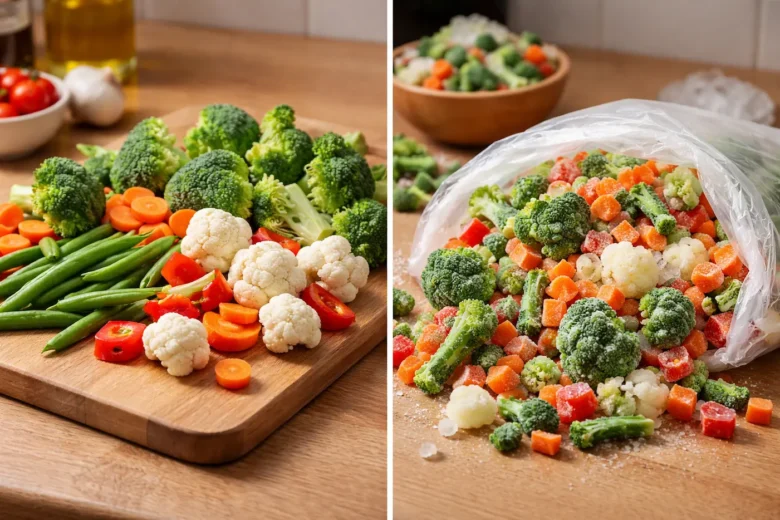
There were days when my fresh vegetables went rotten before I even used them, while frozen ones stayed ready for weeks. Other times, fresh vegetables tasted better in certain dishes, while frozen ones surprisingly worked just as well—or even better—in others. The truth is, both fresh and frozen vegetables have their place in the kitchen. The key is understanding when to use each one. In this guide, we’ll explore the real differences, clear up common misconceptions, and help you decide what works best for your cooking style, budget, and routine.
Understanding Fresh vs Frozen Vegetables
What “Fresh” Really Means
Fresh vegetables are typically harvested and then transported to stores, where they sit until purchased. While they’re called “fresh,” they may have traveled long distances and spent days in storage before reaching your kitchen.
This means that freshness isn’t always as immediate as it sounds. By the time you cook them, some vegetables may already have lost part of their nutritional value and texture.
What “Frozen” Actually Involves
Frozen vegetables are usually picked at peak ripeness and then quickly blanched and frozen. This process helps preserve nutrients, color, and flavor.
Because they are frozen shortly after harvesting, they often retain more of their original quality compared to fresh vegetables that have been stored for several days.
Nutritional Differences Explained
Vitamin Retention
One of the biggest concerns people have is nutrition. Many assume fresh vegetables are always healthier, but that’s not always true.
Frozen vegetables can retain high levels of vitamins because they are preserved quickly. Fresh vegetables, on the other hand, may lose nutrients over time, especially if they’re stored improperly or kept too long before use.
Impact of Storage Time
The longer fresh vegetables sit in your fridge, the more nutrients they can lose. For example, leafy greens can lose vitamin content within a few days.
Frozen vegetables avoid this issue because the freezing process slows down nutrient degradation significantly.
Cooking Methods Matter
How you cook vegetables matters just as much as whether they are fresh or frozen. Overcooking either type can reduce nutrients.
Gentle cooking methods like steaming or sautéing help preserve both flavor and nutritional value.
Taste and Texture Differences
Fresh Vegetables in Cooking
Fresh vegetables often have a crisp texture and vibrant flavor, especially when used soon after purchase. They are ideal for:
- Salads
- Stir-fries
- Dishes where texture matters
Frozen Vegetables in Cooking
Frozen vegetables tend to be softer once cooked because of the freezing process. However, they work well in:
- Soups
- Curries
- Stews
- Sauces
In these dishes, texture is less noticeable, and the convenience becomes a major advantage.
Convenience and Time-Saving Factors
Preparation Time
Fresh vegetables require washing, peeling, and chopping. These tasks can take time, especially on busy days.
Frozen vegetables are usually pre-washed and pre-cut, making them ready to use immediately.
Shelf Life
Fresh vegetables have a limited shelf life and can spoil quickly if not used in time.
Frozen vegetables can last for months in the freezer, reducing food waste and making meal planning easier.
Availability
Some vegetables are seasonal, meaning they’re not always available fresh. Frozen options allow you to enjoy a wider variety of vegetables year-round.
Cost Comparison
Fresh Vegetables
Prices for fresh vegetables can vary depending on the season and location. Out-of-season produce is often more expensive.
Frozen Vegetables
Frozen vegetables are generally more consistent in price and often more affordable, especially when buying in bulk.
They also reduce waste, which saves money in the long run.
Step-by-Step Guide to Choosing the Right Option
1. Consider the recipe.
Think about what you’re cooking.
- Use fresh vegetables for salads or dishes needing crunch
- Use frozen vegetables for cooked dishes like soups and curries
2. Check Your Schedule
If you’re short on time:
- Choose frozen vegetables for convenience
- Skip the prep work and cook directly
3. Evaluate Freshness
When buying fresh vegetables:
- Look for vibrant color
- Avoid wilted or damaged items
If the produce doesn’t look fresh, frozen might be the better option.
4. Plan Your Meals
If you’re planning meals for the week:
- Use fresh vegetables early
- Save frozen vegetables for later days
This helps reduce waste and keeps your meals balanced.
5. Store Properly
- Keep fresh vegetables in the right fridge compartments
- Store frozen vegetables at consistent freezer temperatures
Proper storage ensures both types stay in excellent condition.
Real Experience Section
In my experience, I used to avoid frozen vegetables completely because I thought they were inferior. But once I started cooking regularly, I realized how practical they are. What worked for me was using a mix of both. I now buy fresh vegetables for meals I plan to cook within a couple of days, and I keep frozen ones as a backup for busy days.
One mistake I made was buying too many fresh vegetables at once. I’d feel motivated at the store, but then life would get busy, and half of them would go rotten. Switching to smaller quantities and adding frozen options solved that problem. Another thing I noticed was that frozen vegetables worked surprisingly well in dishes like soups and pasta sauces. I couldn’t even tell the difference most of the time, which changed my perspective completely.
Common Mistakes to Avoid
- Assuming fresh vegetables are always more nutritious
- Overbuying fresh produce and letting it spoil
- Overcooking frozen vegetables, making them mushy
- Not draining excess water from frozen vegetables when needed
- Ignoring storage guidelines for both fresh and frozen items
- Using frozen vegetables in dishes where texture is critical
- Not checking the quality of fresh vegetables before buying
Pro Tips for Better Cooking Results
One useful tip is to combine both fresh and frozen vegetables in your cooking. For example, you can use fresh vegetables for texture and frozen ones to add volume and convenience. If you’re using frozen vegetables, avoid thawing them completely before cooking unless the recipe requires it. Cooking them directly can help maintain better texture.
Blanching fresh vegetables before freezing them at home is another excellent way to preserve quality if you have extra produce. Try keeping various frozen vegetables in your freezer. It makes it easier to prepare quick meals without relying on takeout or processed foods. Furthermore, pay attention to packaging. Choose frozen vegetables without added sauces or seasonings if you want more control over flavor and nutrition.
FAQs
1. Are frozen vegetables as healthy as fresh ones?
Yes, they are often as healthy or more so due to quick freezing after harvest.
2. Do frozen vegetables taste worse than fresh ones?
Not necessarily. While the texture may differ, the taste can be very similar, especially in cooked dishes.
3. Should I thaw frozen vegetables before cooking?
It depends on the recipe. Many dishes allow you to cook them directly without thawing.
4. How long do fresh vegetables last in the fridge?
It varies, but most fresh vegetables last between a few days and a week if stored properly.
5. Can I freeze fresh vegetables at home?
Yes, but it’s best to blanch them first to preserve quality and nutrients.
Conclusion
Fresh and frozen vegetables both have their advantages, and neither is universally better than the other. The best choice depends on your cooking needs, lifestyle, and preferences.
Fresh vegetables offer great texture and flavor for certain dishes, while frozen vegetables provide convenience, longer shelf life, and consistent quality. By understanding how to use each type effectively, you can make smarter choices in the kitchen.
Instead of choosing one over the other, consider using both as part of your routine. This balanced approach not only improves your cooking but also reduces waste and saves time.
If you’re looking to improve your overall kitchen habits, you might also explore topics like proper food storage or meal planning. These small changes can make a big difference in how efficiently and confidently you cook at home.